
Lightweight DroneCAN / UAVCAN v0 node toolkit built on top of libcanard, platform_specific and libparams. It wraps the transport, exposes a small C API for node setup/spin, and offers C++ helpers for typed publishers/subscribers and logging.
- Implements core DroneCAN services out of the box: NodeStatus, GetNodeInfo, Param.GetSet and Param.ExecuteOpcode, RestartNode, and GetTransportStats.
- Platform abstraction (
include/libdcnode/platform.hpp) so you can plug in your own timing, reset, unique-ID, and CAN driver callbacks. - Templated C++ wrappers for publishing/subscribing (
include/libdcnode/pub.hpp,include/libdcnode/sub.hpp) with optional filters and periodic senders; legacy interfaces remain ininclude/libdcnode/publisher.hppandinclude/libdcnode/subscriber.hpp. - Debug logger (
include/libdcnode/logger.hpp) that publishesuavcan.protocol.debug.LogMessagewith severity helpers. - DSDL compiler baked into the build (
Libs/dronecan_dsdlc) so message code is generated during CMake configure.
- C/C++ toolchain with C++17, CMake >= 3.15, Python 3 (for tests/tools).
- Linux SocketCAN stack and
iputilities (used byscripts/vcan.sh). can-utils(for monitoring) anddronecan_gui_toolare handy when playing with the examples.
Set up the Python deps (used by the DSDL generator and tests):
python3 -m venv .venv && source .venv/bin/activate
pip install -r requirements.txt
Then wire the library into your project:
add_subdirectory(libdcnode)
target_link_libraries(my_app PRIVATE libdcnode::libdcnode)
During configure, DSDL code is generated into build/generated/libdcnode/serialization using Libs/dronecan_dsdlc/dronecan_dsdlc.py. If you add custom DSDL namespaces, point DSDL_IN_DIR (see CMakeLists.txt) to your set or rerun scripts/code_generation.sh with your paths.
Provide the platform and params hooks from include/libdcnode/platform.hpp and include/libdcnode/params.hpp in your application; the Ubuntu example shows minimal implementations.
The examples/ubuntu target demonstrates the C API plus the modern C++ pub/sub wrappers end-to-end.
# Prepare a virtual CAN iface once (uses sudo):
scripts/vcan.sh slcan0

# Build and run the example:
make ubuntu
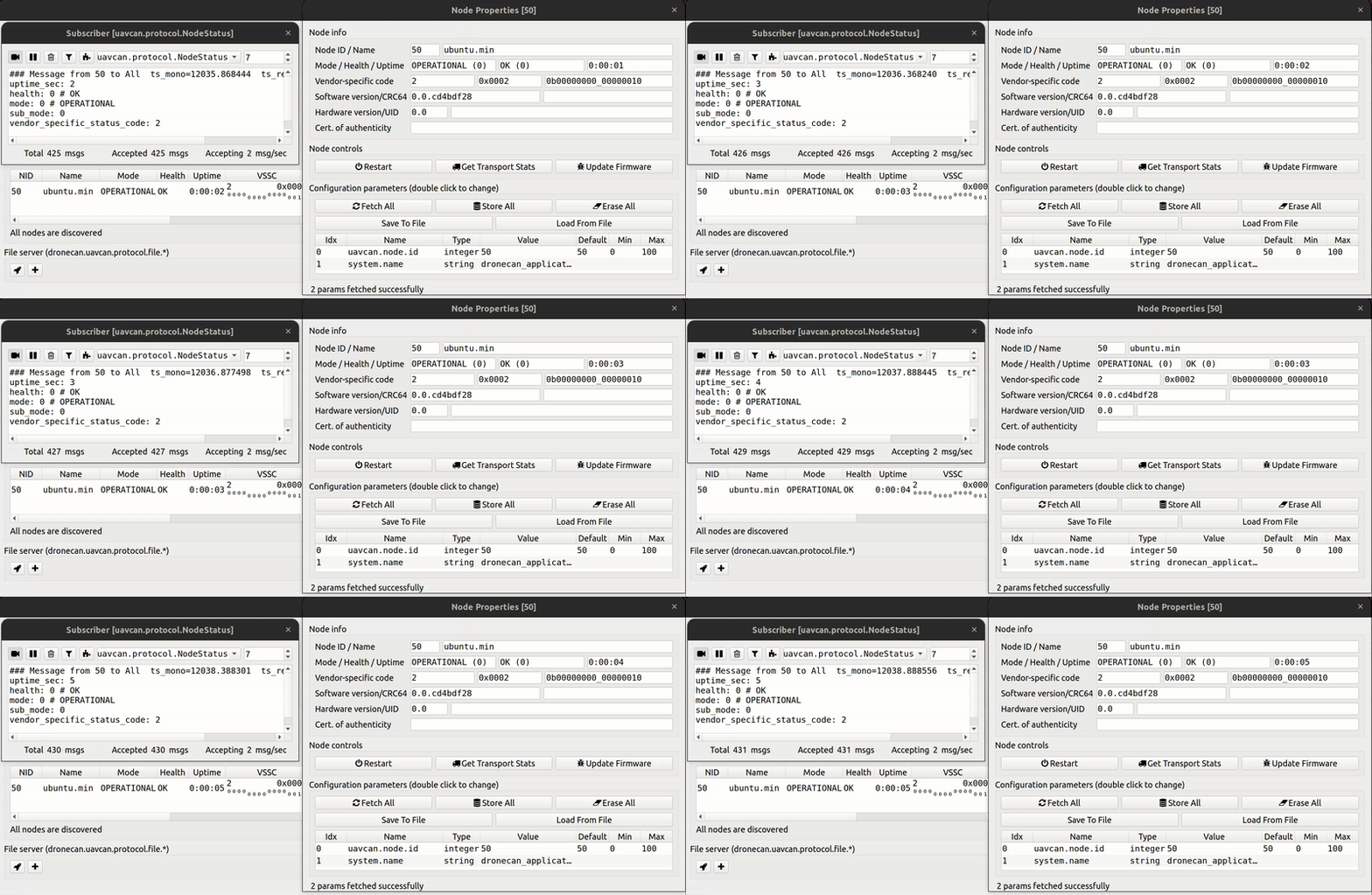
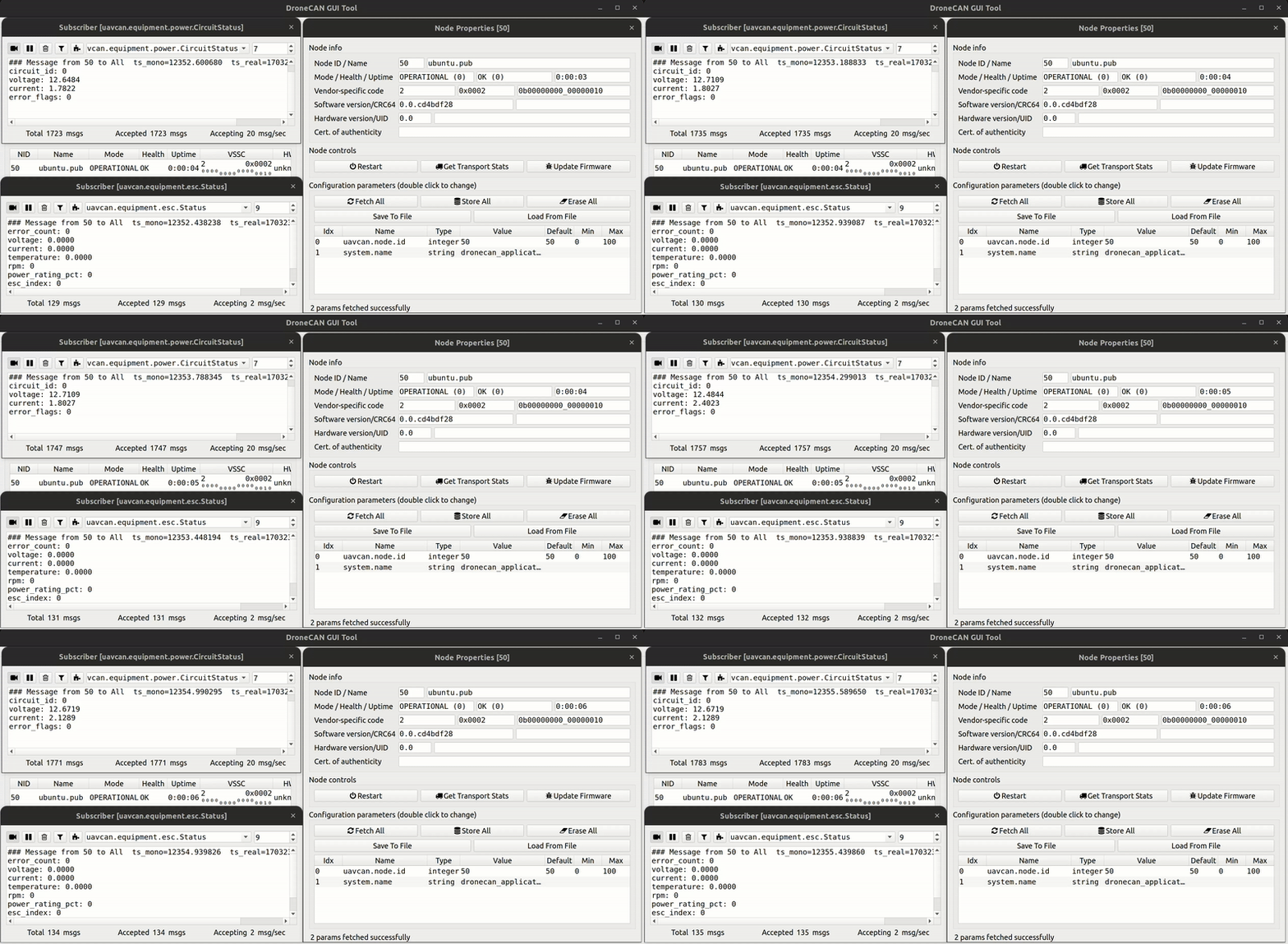
What it does: sets uavcan.node.id (default 50) and system.name, wires platform callbacks (time, restart request, UID, CAN driver) in examples/ubuntu/main.cpp, subscribes to esc.RawCommand/actuator.ArrayCommand/indication.LightsCommand, and publishes periodic equipment.power.CircuitStatus + equipment.power.BatteryInfo while serving NodeStatus/GetNodeInfo.
In gui_tool you will see:
python3 -m venv .venv && source .venv/bin/activate
pip install -r requirements-dev.txt
scripts/vcan.sh slcan0  # once, requires sudo
pytest tests/smoke_socketcan.py
The smoke tests expect the Ubuntu example (node ID 50 on slcan0) to be running; they verify NodeStatus and GetNodeInfo responses via the dronecan Python client.
| Version | ReleaseDate | Note |
|---|---|---|
| v0.7.0 | 2025-12-28 | Added DSDL ser/des generator |
| v0.6.0 | 2025-10-17 | Build model changed: standalone library; platform hooks provided by user (no more source-include mode). |
| v0.5.0 | 2024-09-26 | Decoupled the platform specific functions from the library |
| v0.4.0 | 2024-07-29 | Added macro helpers for pub and sub traits |
| v0.3.* | 2024-01-06 | Incremental serialization additions |
| v0.2.0 | 2024-01-06 | Add bxcan and fdcan drivers |
| v0.1.0 | 2023-12-22 | First public drop; pure C, manual serialization, and source-include usage (include the C sources into your app). |
The software is distributed under term of MPL v2.0 license.